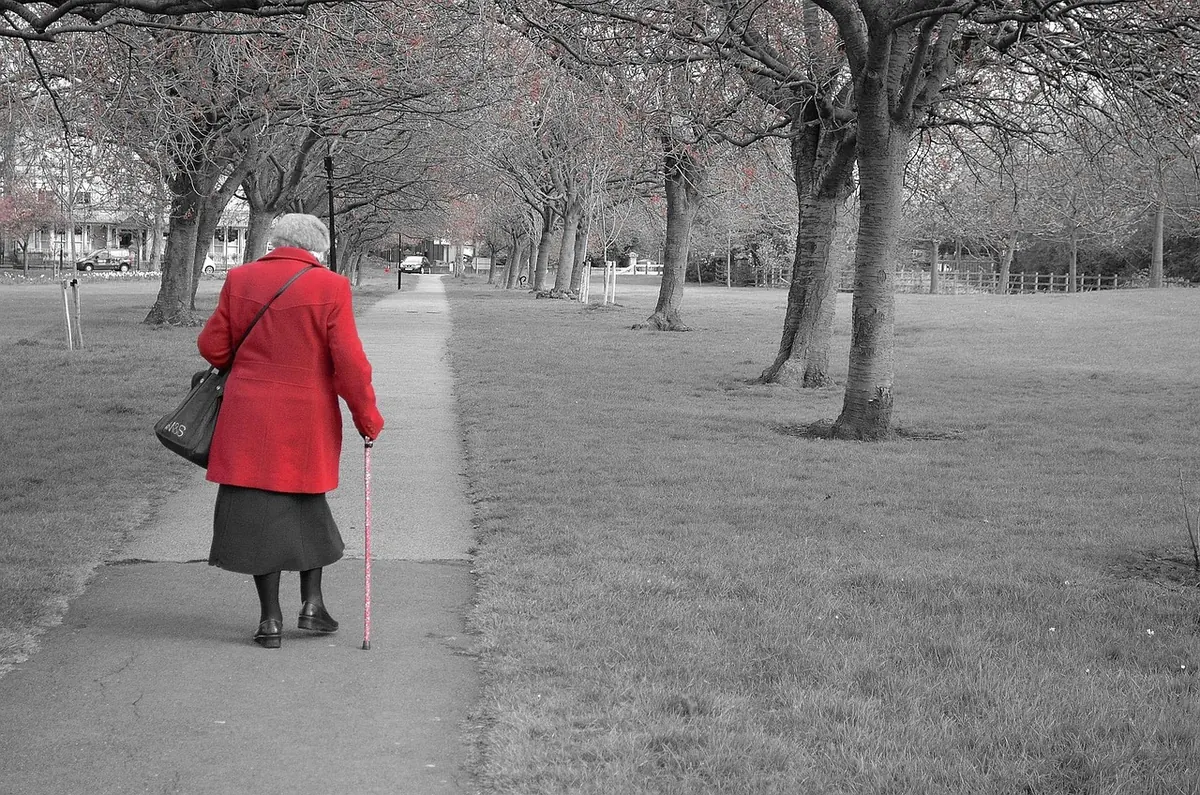
There is a particular longing that arrives in February, when the flat feels tight, the park is grey and everyone with a back garden is talking about bulbs. It is easy to conclude that calm is something you buy with square metres — a lawn, a shed, a view of something other than a wheelie bin. It isn't. A calm corner in a small urban flat comes down to one chair, one lamp and a bit of discipline about what you allow to live there.
Find the corner that already wants to be quiet
Most flats have one. It is usually the spot you walk past without using: the strip beside the chimney breast, the end of the hall by the window, the corner behind the door where the light falls in the afternoon. Look for three things. Daylight, ideally indirect, so you are not squinting. Some distance from the kitchen and the front door, where the traffic of the flat happens. And a wall behind you — a chair with its back to something solid feels settled in a way that a chair floating in the middle of a room never quite does.
If nothing obvious presents itself, try the corner where you currently dump things. Piles form where space is already out of the way, which is exactly what you want. Sit on the floor there for five minutes at the time of day you would actually use it. If the light is workable and the noise is bearable, that is your corner.
Seat, light, green — in that order
The order matters. Most calm corners fail because they are built backwards: the cushions, the candles, the framed print, and nowhere decent to sit.
Start with the seat. It needs to be comfortable for twenty minutes rather than three hours. A second-hand armchair with a firm cushion beats a beautiful stool you slide off. In a genuinely tiny flat, a floor cushion or a folding chair that lives behind the door will do the job, provided you can leave it out rather than folding it away each time.
Then the light. Ceiling lights are for cleaning and finding your keys. What you want is a low, warm pool of light at roughly shoulder height, which means a floor lamp, a clip-on lamp, or a wall light if you are allowed to drill. Look for bulbs labelled warm white, and if you can, plug the lamp into a switched socket or extension you can reach without standing up. If you rent, none of this needs a screwdriver.
Then green. One plant, in a pot big enough to look intentional rather than accidental.
A garden that survives a busy week
Outdoor space is not required; tolerance is. These cope with low light and being watered when you remember:
- Snake plant — upright, architectural, forgiving of a dim corner.
- ZZ plant — glossy leaves, slow growing, hard to kill.
- Spider plant — cheap, cheerful, and it will tell you loudly when it needs water.
- Devil's ivy — trails beautifully from a shelf, and cuttings root in a glass of water.
- Heartleaf philodendron — soft, unstructured, happy in most rooms.
Mint and parsley want more light than a north-facing flat can offer, so keep herbs on the brightest sill you have and accept that they may be short-lived. Most houseplants are killed by kindness rather than neglect: overwatering is the usual culprit, so check the soil before you reach for the jug.
If your corner has no natural light at all, do not fight it. A tall vase of dried stems, a bowl of smooth stones, or a framed photograph of somewhere green does similar visual work without the slow decline of a plant that is quietly giving up.
Softness, sound and scent
Hard surfaces bounce sound around, which is why small flats with bare floors can feel restless even when nothing much is happening. Textiles change that. A rug, a curtain that reaches the floor, a cushion, a throw over the arm of the chair — each one takes a little of the edge off the room. If you do only one thing, hang a heavier curtain at the window nearest your corner. It softens both the light and the acoustics.
For sound, steady low-level noise is easier to live with than intermittent noise. A fan, a radio turned down low, a recording of rain if that is your thing. Consistency matters more than taste. If a sound grates on you, leave it out, however calming it is supposed to be.
Scent: one thing at a time. A single candle, a diffuser, or a sprig of rosemary laid on the radiator. Three competing fragrances in one square metre is a headache, not an atmosphere.
Keep it from becoming a shelf
Left alone, a calm corner collects: unopened post, a laptop, a laundry pile, the bag you take to work. It is not a discipline failure; it is what corners do. So give it a rule. Nothing lives on the chair except you. A small basket beside it takes whatever migrates there, and you empty the basket weekly rather than once a season. Two minutes at the end of the day — mug back to the kitchen, cushion straightened, lamp off — is enough to keep the corner usable.
If you work from home, this is the harder part. A chair in the corner of a room where you also answer emails will not stay restful for long. If there is nowhere else to work, keep the working things in a box that closes, and close it. The point of the corner is that it looks the same whether or not you have had a good day.
Make sitting down the easiest thing in the room
Calm corners fail for boring reasons: the lamp switch is behind the sofa, the book is in another room, the blanket is in a cupboard with the spare bedding. Friction is what stops you using the space you went to the trouble of making.
Reach out from the chair and check. Can you turn the lamp on without standing up? Is there a surface within arm's length for a mug? Is there something to read, and a blanket within reach rather than folded away upstairs? If you need three decisions before you can sit down, you will not sit down.
One hour this weekend
None of this needs to cost much. Take an hour and do it in order:
- Sit in the candidate spot for five minutes at the hour you would actually use it.
- Move one chair there, even if it is borrowed from the kitchen table.
- Add a lamp you can switch on from the chair.
- Live with it for a week before you buy, hang or arrange anything else.
- Then add one plant — and then stop for a fortnight.
The corner will not give you a garden. It will give you twenty minutes with a mug and nobody asking you anything, which was most of what the garden was for. If the spot is cold, damp or draughty and you rent, a curtain and a rug will help, but it is worth raising the underlying problem with your landlord rather than papering over it with cushions.
Photo: hudsoncrafted / Pixabay